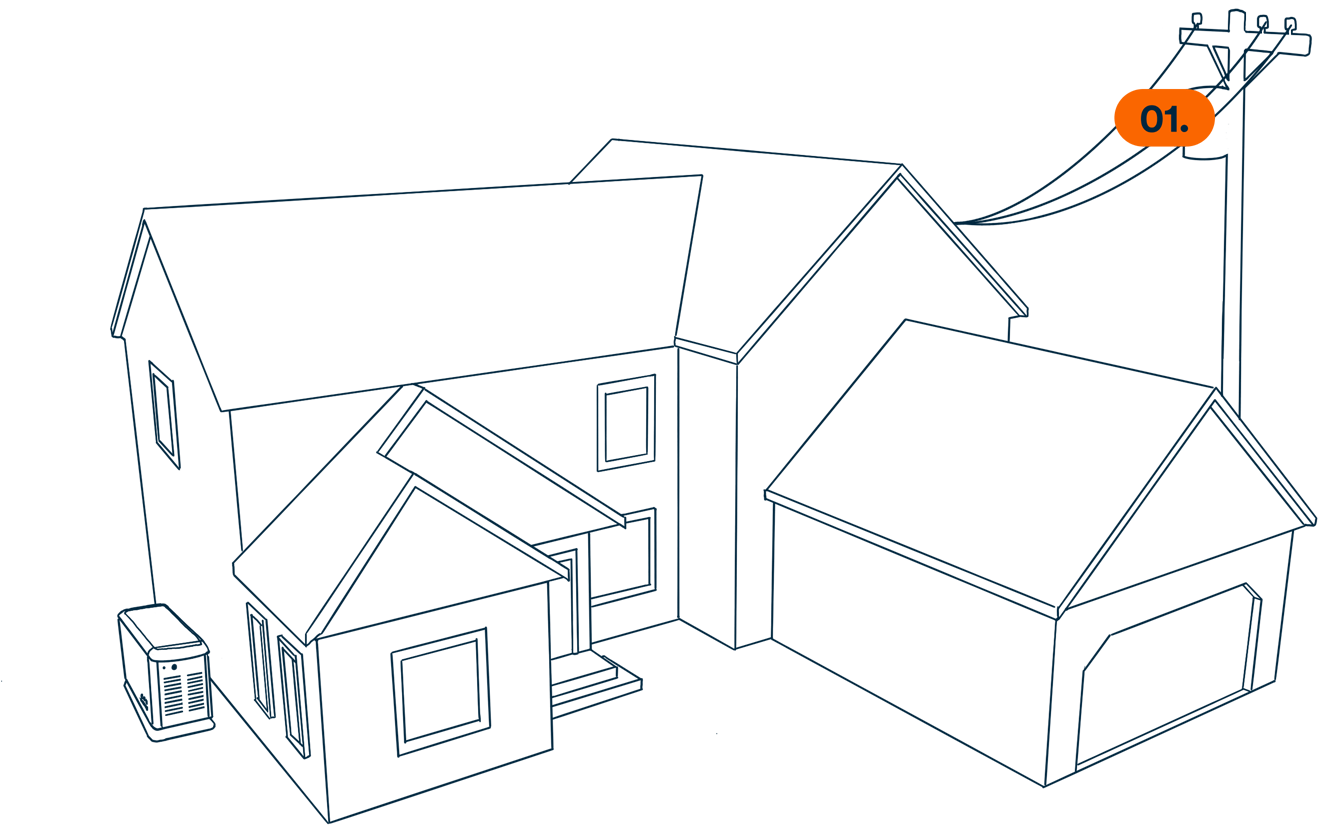
Whether from a storm, equipment failure, or any number of other causes, you suddenly find yourself without electricity.


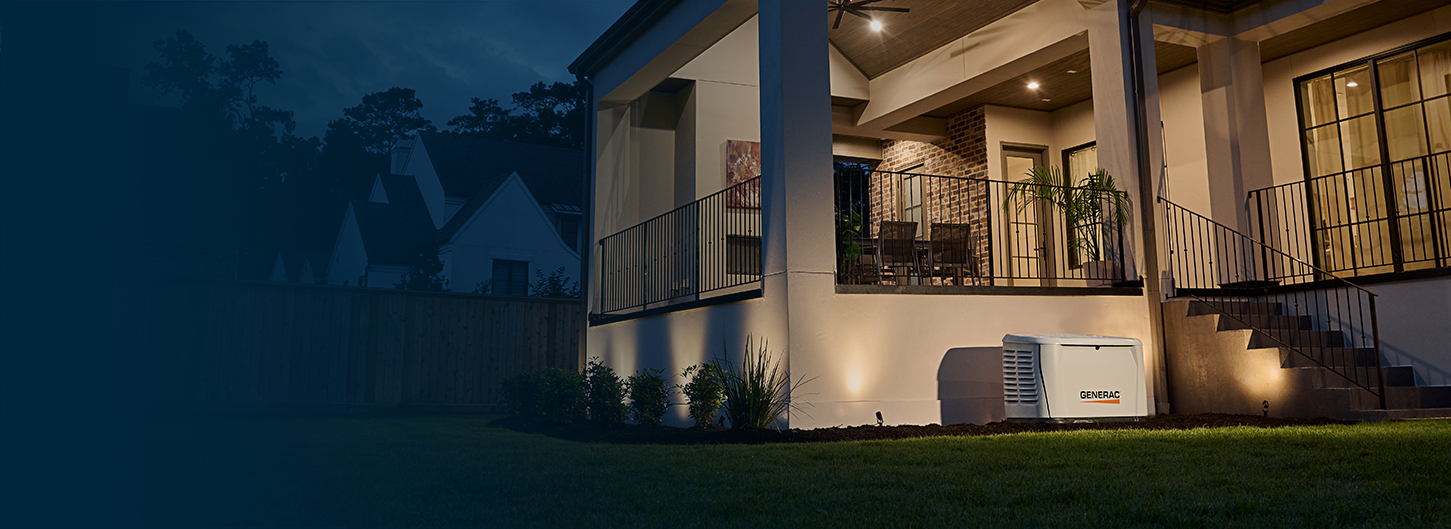
A permanently installed Generac home standby generator does more than keep the lights on when the power fails; it delivers peace of mind.
Your home standby generator is installed outside your home like a central A/C unit and runs on natural gas or liquid propane (LP), depending on what fuel source is available. All home standby solutions are designed to keep you safe, secure and comfortable in an outage.
Whether from a storm, equipment failure, or any number of other causes, you suddenly find yourself without electricity.
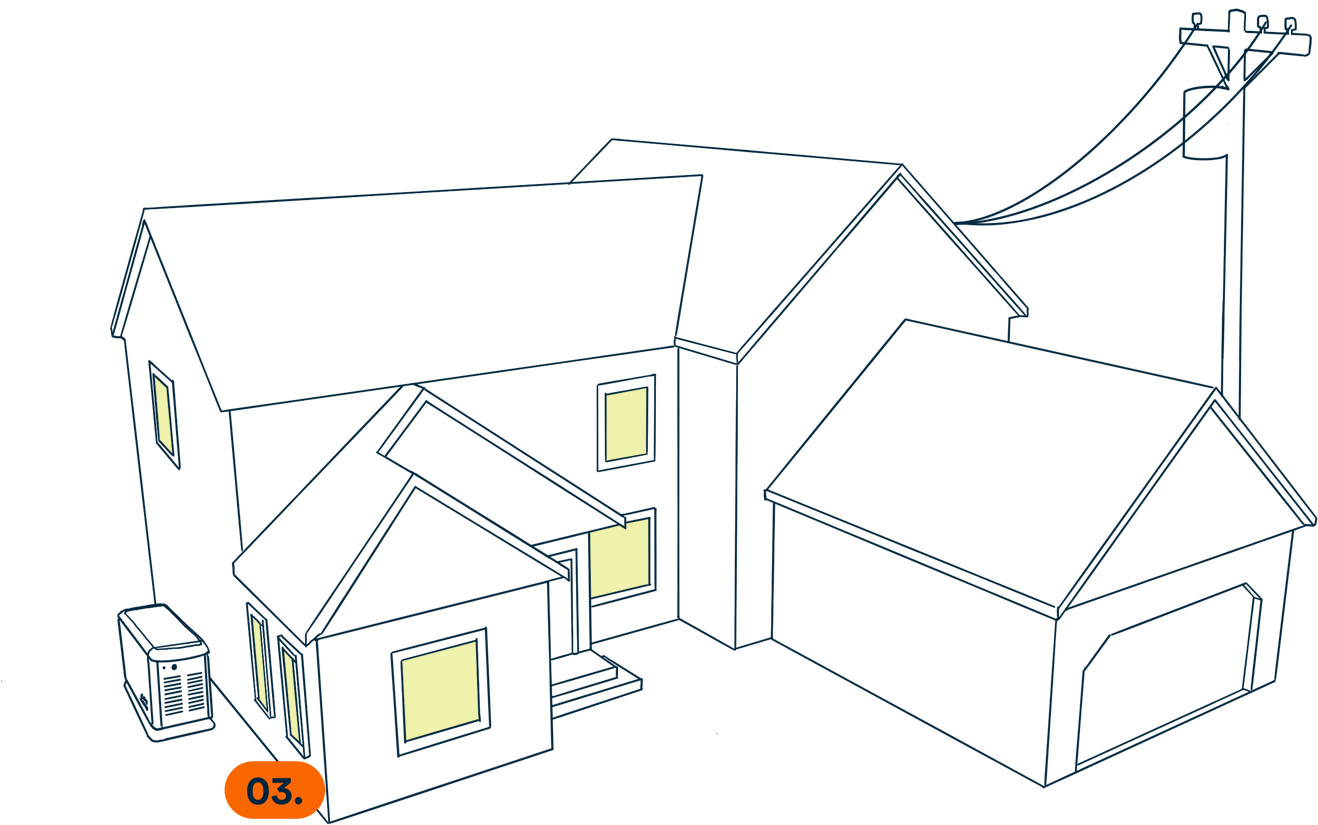
Thanks to the transfer switch technology, your backup generator can start supplying power to your home seconds after an outage begins.

Whether you’re home or not, your Generac home standby system kicks into action, and continues to power your home until utility power returns.

Answer a few questions so we can connect you with local dealers who will provide custom quotes.
Equipping your home with permanent backup power requires a solution as unique as your home and the way you live in it. Work with a local Authorized Generac Dealer to get a detailed estimate for a solution that's configured specifically for you.


Many factors could affect installation costs, including your fuel type, the intended site on your property, permits, meter upgrades and more.
What to expect during installation

With our flexible financing options, customers have installed complete backup systems for $116/mo with 132 fixed monthly payments on a $9,266 Generac Home Standby Generator. Learn more

We’re proud that 8 in 10 homeowners with backup power have chosen Generac.

We know outages don’t only happen 9a-5p. That's why you can always reach someone at Generac, or your local authorized dealer.

Your Generac generator will be installed, serviced and supported by one of 10,000 Authorized Generac Dealers local to your area.
Helpful tips and offers are coming your way.
Get answers to some of the most popular questions about home standby generators.
A home standby generator is a permanently installed backup power system that automatically supplies electricity to your home during a power outage. Installed on your property close to your home, it is connected to your home's electrical system through an automatic transfer switch. The generator detects when utility power is lost and turns on within seconds to restore power to your home. When power returns to the grid, the generator turns off.
A home standby generator helps protect your home by automatically restoring power when utility service is interrupted. Backup power can help prevent food spoilage, maintain heating and cooling systems, reduce the risk of frozen pipes, ensure personal devices stay charged, and keep security systems operational. By minimizing the impact of extended outages, a whole house generator helps improve comfort, safety, and peace of mind for homeowners.
A home standby generator can run for as long as fuel is available and the unit is properly maintained. For every 24 hours of use, the oil levels should be checked and oil added if necessary. Natural gas-powered generators can often operate continuously because they are connected to a utility gas line, while propane-powered generators can run for days depending on tank size and electrical load. Whole home generators are designed to provide extended backup power during prolonged outages while automatically managing household energy demands.
The right size whole house generator depends on your home's square footage, electrical usage, and the appliances or systems you want to power during an outage. Smaller homes may require a 10–18kW home standby generator, while larger homes with multiple air conditioning units or high electrical demand may need 22kW-28kW. A Generac dealer can perform a load assessment to help determine the best standby generator size for your specific needs.
Most home standby generators operate on either natural gas or liquid propane (LP). Natural gas generators connect directly to an existing gas utility line, providing a continuous fuel supply during most outages. Propane-powered standby generators use an on-site fuel tank and are often a good solution for homes without natural gas service. Both fuel options provide dependable backup power and long runtimes when properly maintained.
A well-maintained home standby generator can last 20 years or more, depending on usage, operating conditions, and routine maintenance. Most standby generators are designed for thousands of operating hours and undergo extensive testing to withstand long-term use. Following the manufacturer's recommended maintenance schedule can help maximize the lifespan and performance of your home generator system.
The primary difference between a home standby generator and a portable generator is automation and power capacity. A home standby generator is permanently installed, automatically turns on during an outage, and can power selected circuits or an entire home. Portable generators require manual setup, refueling, and connection to appliances or transfer equipment. Whole house generators also typically provide greater power output and longer runtimes than portable units.
Yes, a properly sized whole home generator can power an all-electric house. The generator must be large enough to support major electrical loads such as heating and cooling systems, water heaters, kitchen appliances, and other essential equipment. Because all-electric homes generally require more power than homes that use natural gas for heating or cooking, a larger sized generator might be needed. We suggest working with an electrical professional when determining generator size.