Home Management
How Does Solar Power Work for a Home?
9 MIN READ
September 14, 2026

Key Takeaway:
Solar power works by using solar panels to capture sunlight and turn it into direct current, or DC, electricity. An inverter then converts that DC electricity into alternating current, or AC, electricity that can power household systems and appliances. Depending on the home's setup, extra solar energy may be stored in a battery or sold back to the utility grid.
If you're considering solar for the first time, you're not alone in wondering how it all works. Between the technical details and unfamiliar energy terms, solar can seem like something you left behind in your high school science textbooks. Thankfully, the core concept is simpler than you might think: Solar panels collect energy from sunlight and convert it into electricity your home can use.
Understanding the basics makes it easier to compare your options, ask the right questions and decide whether a solar energy system is a good fit for your household. In this guide, we'll break it down in plain language—no engineering degree required.
As energy costs continue to rise, many homeowners are looking for ways to take control of their household energy use. Generac's home energy solutions can help you understand how solar, battery storage and backup power work together for greater energy independence and peace of mind.
At its core, solar power is just energy from the sun, captured and put to work. Depending on the technology, that energy can become either electricity or heat.
When most people talk about “going solar” at home, they mean photovoltaic (PV) panels—the sleek, dark panels you see on rooftops that convert sunlight directly into electricity for your home. This is different from solar thermal systems, which use the sun's power to heat water or air.
Solar panels contain photovoltaic cells that capture energy from sunlight and convert it into direct current (DC) electricity. The panels don't require fuel or moving parts—just exposure to sunlight.
The amount of electricity a solar system generates depends on more than just sunny weather. Factors like roof angle, shade, season, temperature and the condition of the panels can all affect performance. That's why actual energy production may differ from a panel's rated output, which is measured under controlled testing conditions.
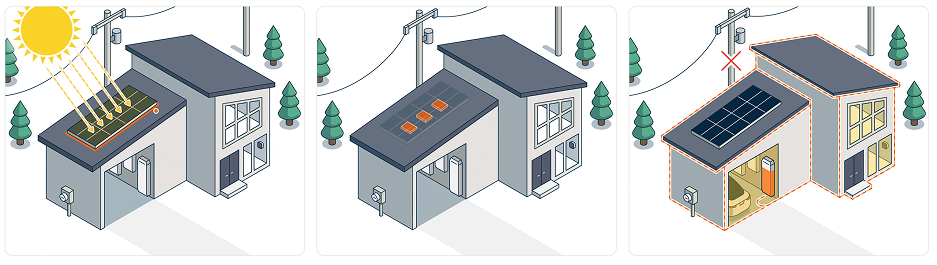
Solar panels produce DC electricity, but most household appliances and electrical systems run on AC (alternating current) electricity. You don't have to understand the difference. Just know that the inverter is the component that bridges the two, converting the DC electricity from the panels into AC electricity the home can use.
Choosing the right solar inverter is one of the most important, and often overlooked, decisions when planning solar. Inverters have their own power output rating, separate from the panels—and if that rating is lower than what the panels can produce, it caps the system's output even on a perfectly sunny day.
Generac's PWRmicro microinverters are high-powered, delivering up to 28% more power* than the leading product line, so homeowners can capture more usable energy from every panel.
*Comparison based on maximum power output of PWRmicro (2 x 410 W = 820 W) versus the industry leading microinverter product line as of August 2026.
The two most common inverter types for residential solar are microinverters and string inverters.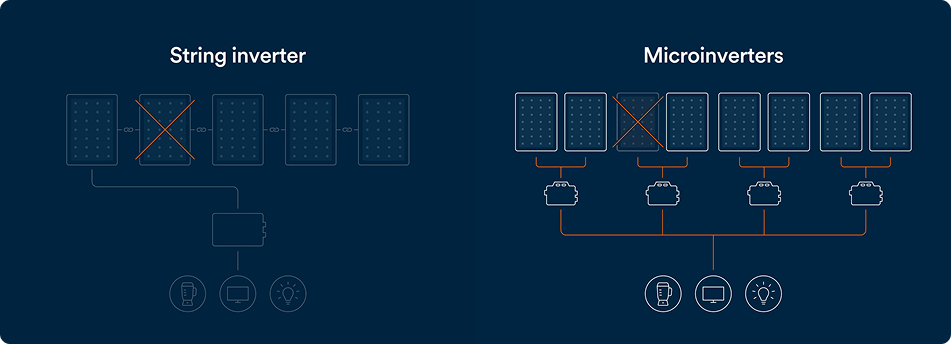
A string inverter connects all panels in a series and converts their combined DC output at a single point. It’s a common, cost-effective option, but the performance of the entire array can be affected if one panel is shaded or underperforming.
Microinverters convert DC to AC at the panel level instead of for the whole array at once. If shade or an issue affects one panel, it has less impact on the rest of the system than it would with a string inverter.
The right choice depends on the roof layout, shading conditions and system goals. A qualified installer can help evaluate which approach fits the home.
A residential solar system includes several components that work together to capture, convert, distribute and optionally store energy.
Solar panels need sunlight to produce power, so it follows that anything blocking or reducing that sunlight will affect how much electricity they generate. Nighttime, cloudy weather, heavy shade and winter conditions can all bring production down. And if that overlaps with a period of high household demand, solar alone may not always be able to keep up. That's why it’s so important to understand your home energy goals upfront, so the system you design accounts for these realities, and you’re less likely to be caught off guard.
Depending on the home's setup, when panels are not producing enough, the home may draw power from the utility grid, a solar battery, a backup generator or a combination. Which setup mix makes sense for you depends on what you're trying to achieve. Check out Generac Home Energy Solution bundles—they’ll give you a good idea of how your options could come together.
It is also important to understand that having solar panels does not automatically mean power is available during a grid outage. Unless you are completely off-grid or have a battery storage system configured for backup, residential solar is designed to shut down during a power outage as a safety precaution for individuals working on power lines.
Whether solar can power an entire home depends on a combination of factors: solar array size, household energy usage, sunlight exposure and whether battery storage is included. There is no single answer that applies to every home.
A larger home with high electricity use may need a different system design than a smaller or more efficient home. The goal is to design a system around what the homeowner actually needs, whether that means lowering utility bills, preparing for outages or building toward greater energy independence.
A dealer or installer can evaluate the specific home and help size the system accordingly. To start that conversation, get an estimate.
Solar quotes and system proposals use specific terms that can be confusing without context. Here’s a cheat sheet:
An 8 kW solar array will not always produce 8 kW on the roof, and a 400-watt panel will not always produce 400 watts. Heat, shade, weather, roof angle, season, system design and inverter power rating all affect real-world output. Understanding this gap between rated and actual production helps homeowners ask better questions when reviewing a quote.
Once the components and process are clear, the next step is understanding whether solar makes sense for a specific home and what it might offer. That includes potential electric bill savings, renewable energy benefits, solar plus storage flexibility, honest limits like upfront cost, weather dependence and roof fit, and what to expect from solar during an outage.
Dive deeper into these topics with our article about the advantages of solar energy.
Solar panels can produce electricity in indirect or diffused light, but output is typically lower on cloudy days, in shaded conditions or during periods with less sun. Direct sunlight generally produces the highest output.
Solar panels do not produce power at night. Depending on how the system is set up, the home may draw power from the utility grid, a solar battery, a backup generator or some combination of those options.
Depending on your system design and utility rules, excess solar energy may be stored in a battery for later use or sold back to the utility grid.
Panel ratings are measured under controlled test conditions, not on a real rooftop. Shade, roof angle, outside temperature, weather, system design, and inverter power all affect how much electricity the panels actually produce in a given environment.
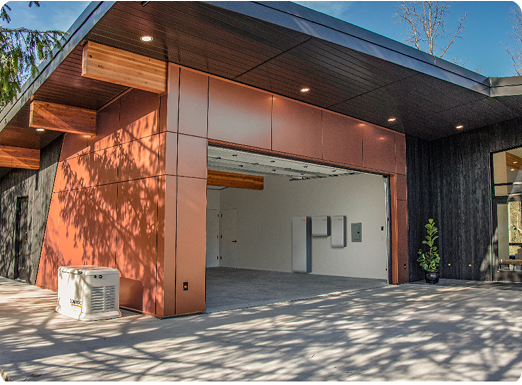
See how solar, battery storage and backup power can work together for your home. Then, find a qualified installer to help you secure power on your terms.