Home Management

Advantages of Solar Energy: What Homeowners Should Know

4 MIN READ August 17, 2026


Key Takeaway: Solar power could help you save on energy costs

Solar can help you use less electricity from the grid and lower your monthly energy bills. The exact benefits depend on where you live, how much power you use and how your system is set up. Before making the switch, it's worth considering factors like upfront cost, roof conditions, local utility rules, and whether you want solar alone or a more complete home energy solution that includes battery storage or a backup generator.


There's a reason more homeowners are taking a closer look at solar. For some, it's about reducing their environmental impact. For others, it's about gaining more control over how they power their homes. But for many, the first question is simple: Will solar save me money?

It's an important consideration, but it's only one piece of the puzzle. Factors like your roof, energy use, local utility policies and long-term goals all play a role in determining whether solar is a good fit. This table is a great start:


What to Consider Advantage What to Keep in Mind
Electric Bill Savings Solar may offset some or all electricity costs Savings depend on usage, rates, incentives, net metering and system size
Grid Reliance Generate some electricity on your own instead of relying entirely on the utility System still interacts with the grid, and, without battery storage, shuts off during outages
Costs & Financing Multiple payment options exist to fit different budgets and goals Payment structures can affect ownership, incentives and long-term value
Weather & Seasonality Modern solar technology is designed for durability against extreme weather Production changes with clouds, shade, snow, heat and time of year
Roof Condition, Shade, & Orientation A well-suited roof can maximize solar output Not every roof is a good fit; if shade, age, and orientation are working against you, ground mounts are a possible alternative
Solar Incentives Some utilities credit homeowners for excess solar sent to the grid Rules vary by location and can change
Renewable Energy Solar uses sunlight, a renewable resource Panels have manufacturing and end-of-life considerations
Battery Storage Store solar energy for later use, including backup support and nighttime use Backup capability depends on system design, battery capacity and energy use
Backup Generator Primarily for outage resilience; can complement solar and storage Solar savings may support a broader resilience plan that includes a generator


Quick Tip

Generac's PWRmicro solar microinverter, which delivers up to 28% more power* than the leading product line, can help homeowners get more from their solar panels. 

**Comparison based on maximum power output of PWRmicro (2 x 410 W = 820 W) versus the industry leading microinverter product line as of August 2026.


Advantages of Solar Energy 

Electric Bill Savings

For many homeowners, the biggest appeal of solar is the opportunity to lower your electricity costs. When your panels generate power, that's energy you're not buying from the utility, and those savings add up over time. If your system offsets most or all of your usage, your monthly electric bill could be replaced by a solar financing payment that's often equal to or less than what you were already paying, and unlike your utility bill, that payment stays consistent and has an end date.

That said, savings aren't guaranteed: they vary based on your household's energy use, local electricity rates, system size, battery storage, available sunlight and net metering policies. While solar can significantly reduce electricity costs, it doesn't automatically eliminate them. Most homeowners with only solar still rely on the grid at times, especially at night or during periods of lower solar production.

Grid Independence

Solar gives homeowners the ability to generate some of their own electricity rather than relying entirely on the utility for everyday power needs. For many, that added control is just as appealing as the potential cost savings.

Of course, solar doesn't operate in a vacuum. Most systems continue to work alongside the grid, with some homeowners choosing to add battery storage and/or a backup generator
for greater energy independence.

Costs and Financing

When exploring solar, it's important to understand how system size, equipment, installation requirements and financing choices can affect your investment.

The good news is that homeowners have several ways to go solar, including cash purchases, loans and leases. Each option offers different benefits related to ownership, incentives, monthly payments and long-term flexibility. For a closer look at these options, see Generac's guide to solar financing options.

Weather and Seasonality

Solar production changes with the weather and the time of year. Cloud cover, shade, sun angle, snow and temperature all influence how much electricity panels generate on any given day.

That means output will naturally look different in winter than it does in summer, and it will vary by region as well. These patterns are expected and factored into system design from the start.

Looking at solar over a full year—rather than day to day—gives a more accurate picture of what a system can produce.

Rain falling on solar panels mounted on a roof surface.


Roof Condition, Shade and Orientation

Not every roof is equally suited for solar, but here’s the good news: Solar panels aren’t as fussy as some homeowners might think.  

Generally, homes with good sun exposure, a structurally sound roof and enough remaining roof life are the best candidates. Shade from trees, complex rooflines or a roof that’s due for replacement can make things more complicated—but not necessarily off the table. 

Direction matters too. South-facing roofs tend to produce the most energy, while east- and west-facing setups can still perform well.  

And if your roof isn't a good fit, your yard might be. Ground-mounted systems are a good alternative for homeowners with available land. Unlike rooftop panels, ground mounts can be positioned and angled for optimal sun exposure regardless of roof orientation—in some cases, you can even adjust seasonally. For the right property, a ground mount can actually outperform what a rooftop installation would have delivered. 

Because every home is different, a site evaluation is the best way to understand what’s realistic and how a system would need to be designed to fit your roof and your goals. Ready to find out? Get an estimate. 


Net Metering and Solar Incentives

In many areas, homeowners can earn credit on their electric bill for the extra solar power their system sends back to the grid. It’s called net metering, and it's one of several ways solar can pay you back over time.

Net metering policies vary by utility and location. Some programs offer full credit for excess energy, while others provide partial credit or have guidelines for how much energy can be exported to the grid. Because these programs can evolve, it's a good idea to check with your utility or installer to understand the options available where you live.

That’s not the only way to save on solar: Local and federal incentives can lower both installation and equipment costs. Depending on your location, you may also qualify for rebates, tax incentives or programs like virtual power plants (VPPs) for homeowners who add battery storage. Resources like DSIRE and EnergySage can help you find programs in your area—just make sure to confirm with your utility or installer.


Renewable Energy

Solar power is often associated with environmental benefits for good reason. The sun is a naturally replenishing resource that provides energy every day. For homeowners, that can mean relying less on grid electricity, which may still come from fossil fuel sources depending on the region.

Like any technology, solar isn't without impact. Manufacturing and end-of-life recycling are part of the equation. But over the full life of a system, typically 25 years or more, solar panels generate far more clean energy than what’s required to produce them. Learn more from the U.S. Energy Information Administration.

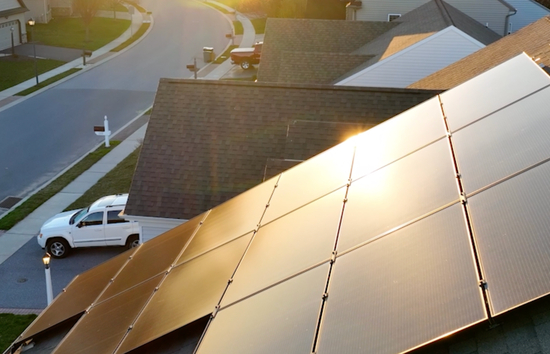
Aerial view of residential homes with solar panels on terracotta tile rooftops surrounded by trees.


Solar Battery Storage

Solar panels produce power when the sun is shining. Battery storage makes sure more of that power is available when you actually need it. Energy your system generates but doesn't use in real time gets stored in the battery, ready to deploy when the sun is hiding or electricity costs are higher. In areas with less favorable or no net metering policies, instead of sending excess energy back to the grid, you're better off banking it for yourself.

And when the grid goes down, battery storage changes everything. Without a battery, most solar systems are required to shut off during a grid outage, a safety measure that surprises a lot of homeowners. With a battery, your home has a source of power to draw from even when the utility is down. How long that lasts and what it can power depends on your battery capacity, your system design and what loads you're backing up. Take a look at Generac's PWRcell 2 home battery system for more details.

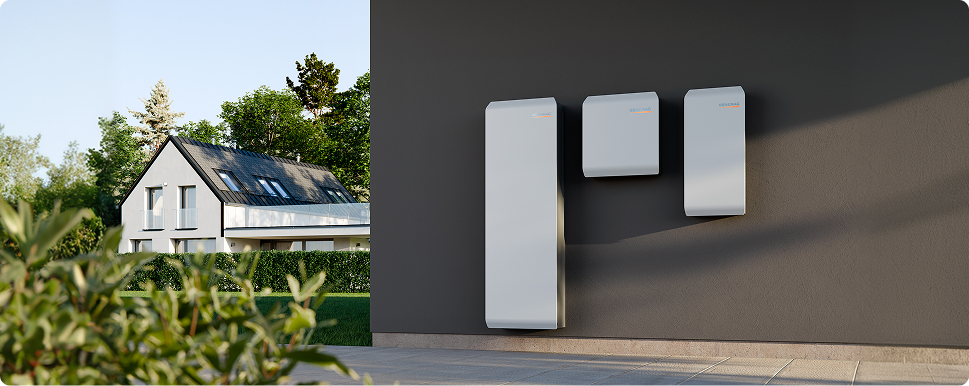
Split image showing a modern home exterior on the left and a Generac PWRcell 2 home battery storage unit on the right.


Backup Generator

Home standby generators take a different approach to backup power. Instead of storing energy, they run on natural gas or liquid propane and provide power on demand during an outage, supporting longer durations or broader household needs than a battery alone. Some homeowners pair solar, storage, and a generator for a more complete backup plan, depending on their goals and how much coverage they want. For a closer look at how the two compare, see Generac's guide to choosing between a home generator and solar battery storage. Or explore Home Energy Solution bundles to see what combination might be right for you.


Questions to Ask Before Choosing Solar

These questions can help move from general research into a more productive conversation with a dealer or installer.

  • How much electricity does my home use?
  • How much sunlight does my roof receive?
  • What incentives or utility programs are available in my area?
  • How does my utility handle excess solar energy?
  • Do I want solar only, or solar plus storage?
  • Am I primarily looking for bill savings, energy control, backup power or some combination?
  • How long do I plan to stay in my home?
  • Is my roof in good condition and suitable for solar?

A qualified dealer or installer can help evaluate these factors for a specific home. To start that conversation, connect with a solar energy dealer.

Common Questions About the Advantages of Solar Energy

The main advantages include lower electricity costs, more control over where your power comes from and access to a renewable energy source. The trade-offs may include upfront investment, production that varies with weather and season and the fact that not every roof or property is a good fit. Weighing both sides against your home, budget and goals is the best way to know if solar makes sense for you.

The main fit factors are roof condition, available unshaded roof space, roof orientation, local sunlight, household electricity use, utility rates, available incentives, and whether the homeowner wants solar alone or solar plus storage. A site evaluation by a qualified installer is the most reliable way to assess fit. Request an estimate to get in touch with a local installer in your area.

Shade can reduce solar production and extend the time it takes for a system to recoup its cost. The extent of the impact depends on how much shade the roof receives, when during the day it occurs and what percentage of usable roof area is affected. A solar professional can evaluate the roof, assess tree cover and obstructions, and determine whether a different system design, like a ground mount or panel layout, would perform better.

Incentives and utility credit rules can affect the financial case for solar. Federal, state, and local incentives provide ongoing financial benefits through tax credits, rebates, and performance-based programs, while net metering credits reduce your utility bill over time. Both vary by location and can change over time. Confirming current incentive availability and utility policies with a qualified local installer is an important step before making a financial decision based on those factors.

Solar panels have no moving parts and are built to perform for many years with minimal maintenance, which makes them a low-hassle way to generate electricity. However, actual output depends on sunlight, shade and roof orientation. Panels alone also do not provide backup power during an outage unless they are paired with battery storage. Manufacturing and end-of-life recycling are part of the full picture as well.


Generac dealer meeting with homeowners

Explore the Generac Home Energy System 

Once the benefits and trade-offs are clear, the next step is understanding how solar, storage, backup power and smart energy management can work together for a specific home. 


Explore The Generac Home Energy SystemConnect With A Solar Energy Dealer


Share:

Related Articles