Home Management
What Size Generator Do I Need?
4 MIN READ
August 09, 2026
Key Takeaway: What Size Generator Do I Need?
Most homes need a generator sized around the appliances and systems they want to keep running during an outage, not square footage alone. A 1,550 sq. ft. home and a 2,000 sq. ft. home may need very different generator sizes depending on central air, well pumps, electric appliances, medical equipment and backup power priorities.
The best way to choose the right size is to list your essential loads, understand which appliances have high starting wattage and have a professional complete a load analysis for your home.
Losing power is more than an inconvenience. For families that depend on well pumps, medical devices or home offices, an outage is a disruption that carries real consequences. A whole-home standby generator restores that stability automatically, without you lifting a finger. If you depend on uninterrupted power, the question isn’t whether you need one. The question is which size is right for your home and your life. You have plenty of options: Generac offers the largest range of air-cooled home standby generators in the industry, from 10kW to 28kW.
Here’s what most homeowners get wrong: Bigger is not always better. Oversizing a generator means overpaying at purchase and every time it runs. The goal is to match your generator to your peak electrical load, not your square footage. If you’re ready to skip the research and get a number specific to your needs, request a professional site survey here.
Not all appliances are created equal when it comes to power demand. If you’re trying to gauge your power needs, it helps to divide your home appliances into tiers, starting with the must-haves.
You’ll want to choose a unit powerful enough to run your essentials intelligently, with load management technology handling peaks from the heavy hitters as they come.
Square footage is a useful frame of reference, but two homes of the same size can have very different power demands. A 1,550 sq. ft. home with gas heat and a single AC unit, for example, is a completely different electrical challenge than a 1,550 sq. ft. home with an electric heat pump and a well pump.
In this bracket, larger options would likely be overkill. With one or two Load Managers, an 10kW to 14kW unit can prioritize the AC and well pump to keep you comfortable. If your home relies on an electric heat pump or high-draw medical equipment, stepping up to an 18kW unit might be a safer bet.

For mid-sized homes, an 18kW to 22kW unit is the sweet spot. This range provides enough capacity for Level 1 and Level 2 appliances—and the Load Manager ensures that your Level 3 systems won't trip the breaker when they start simultaneously. A 22kW unit is the industry standard for homes in this range seeking whole-home protection based on load.
Square footage tells you roughly how much conditioned space your HVAC system needs to serve. It doesn’t tell you how your home is heated, how many motors need to start at the same time, or what your family's power habits look like during a multi-day outage. Two neighbors with identical floor plans could require generators with an 8kW gap or more.
The table below illustrates why home size is a starting point, not the final answer.
Remote workers and homeowners who rely on CPAP machines or oxygen concentrators should factor those loads into their planning from the start. Sensitive electronics, including medical devices, can be affected by Total Harmonic Distortion (THD) and generator quality varies on this measure. A Generac dealer can account for both during a site survey.
The most common mistake in generator sizing is purchasing enough capacity to cover every appliance running at full power at the exact same second. That scenario almost never happens in a real home. Instead, load management technology monitors your generator's output and intelligently cycles high-draw appliances so your system never overloads.
Here’s where Generac's Load Management solutions come in handy. Instead of purchasing a larger, more expensive unit to cover worst-case peaks, you can pair a mid-sized generator with one or more Load Management solution and let the system manage those peaks automatically. The result is a right-sized system that costs less to buy and less to run over its lifetime.
To bridge the gap between a smaller generator and a large home, Generac introduced the Load Manager. The load manager is available for purchase separately from an authorized Generac dealer.
Self-Aware Protection. The Load Manager is installed in-line with your high-draw appliances and constantly monitors the generator's frequency. It knows in real time how hard the system is working.
Intelligent Shedding. If the system approaches an overload—for example, if the central AC and electric dryer started at the exact same moment—the Load Manager steps in, temporarily pausing the lower-priority load to keep power stable for everything else.
The Installation Advantage. Unlike older load management systems, this Load Manager is controlled wire-free. This means a faster, less invasive installation and significantly lower labor costs compared to systems that require wiring back to the transfer switch.
We already know that homes with the same square footage can require totally different power needs. So how do you estimate your actual load?
These two terms are a helpful shorthand: If a generator covers the "Essential Circuits," it should protect your refrigerator, lighting, well pump and a handful of critical outlets. "Whole-House" coverage is further reaching—it’ll keep your HVAC, kitchen appliances and high-draw systems running with minimal interruptions.
Every appliance with a motor also carries two power numbers. Running wattage is the steady-state power the appliance draws during normal operation. Starting wattage, sometimes called surge wattage, is the burst of power needed to start the motor—often two to three times the running figure. Sizing for starting wattage is what separates a system that works reliably from one that trips a breaker every time the AC cycles on.

Before you call a dealer, a few minutes of preparation could make that conversation more productive. This framework is a pre-planning guide, not a replacement for a professional assessment or specific unit recommendation.
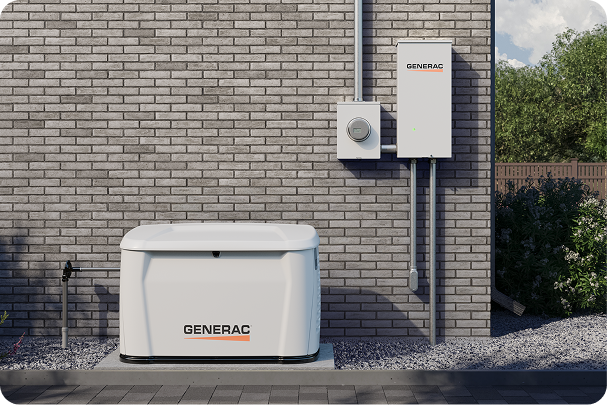
Because the Load Manager is self-aware and does not require control wires running back to the transfer switch, it simplifies the electrical work your installation requires. Fewer wires mean fewer labor hours, a less invasive process and, in most cases, a lower total installed cost compared to older load management approaches.
Don’t forget to consider the big picture. Your unit price is the starting point, not the total cost. Professional installation, permits, a concrete pad, gas line or LP tank, plumbing and electrical work add significant costs to the project. Before finalizing a budget, ask your dealer for a full installed-cost estimate that includes every line item.
Professional installation is required, not optional. Your product warranty demands it and your safety depends on it. It’s not a weekend project—even for the most determined DIYers.
One last note: generators make noise during operation. Generac is a recognized leader in quiet generator technology, but every standby unit produces sound when it runs. Check your local ordinances for property line setback requirements and acceptable decibel levels before you install.
Generac transfer switches make it possible to switch between utility and generator power. Depending upon the application, the transfer switch will either work automatically or manually.
You can install a generator transfer switch yourself if you are comfortable working with electricity, but it carries serious safety risks. Most jurisdictions require you to pull an electrical permit and pass an inspection.

This article and our buyers’ guide are a great start, but they can’t replace a professional evaluation of your home and specific needs. Talk to an authorized Generac dealer, and they’ll give you a recommendation you can rely on.
In most cases, yes. A 22kW generator is the industry standard for whole-home protection for houses ranging from 2,500 to 3,000 sq. ft. Whether it can handle your specific home depends on how many high-draw appliances you’d run simultaneously. That said, when paired with Generac Load Managers, a 22kW unit can direct power to your most critical appliances to prevent overloads.
A 3-ton central air conditioner typically requires about 3.5kW to 5kW of running wattage, but it can demand up to 15kW to 18kW in starting power to get the compressor moving. Rather than buying an oversized generator just to cover that initial spike, you can take a more efficient approach and pair a mid-sized unit—a 14kW or 18kW—with a Load Manager or a Soft Start kit to absorb the surge and allow you to run your AC on a smaller, more affordable system.
Running (rated) wattage is the continuous power an appliance draws during normal operation. Starting (surge) wattage is the burst needed to start the motor, typically two to three times the running figure. The working formula is: Total kW Required = (Sum of all running wattages) + (Highest single starting wattage burst). Because this calculation requires accurate nameplate data for every appliance, a site survey conducted by a Generac dealer is the most reliable way to get a number you can trust.
Most 1,550 sq. ft. homes require between 10kW and 18kW. A 10kW unit covers essential circuits including lights, refrigeration and small appliances. If you want to run central air conditioning or a well pump, a 14kW to 18kW unit provides the overhead to do that without straining the system.
A 2,000 sq. ft. house typically needs a 20kW or 22kW unit for whole-home coverage. Smaller units can power the essentials, but a 22kW is the industry standard for ensuring your HVAC system and high-draw kitchen appliances run simultaneously without interruption.
Yes. A professional site survey is the only way to ensure full accuracy. An authorized dealer will measure the exact starting and running wattage of your appliances, inspect your electrical panel and confirm that the unit is safely and correctly sized before any equipment is ordered.